Key takeaways
- What makes a bar look medical is bright chrome, a thick 1½-inch tube and exposed screw flanges. None of those are necessary.
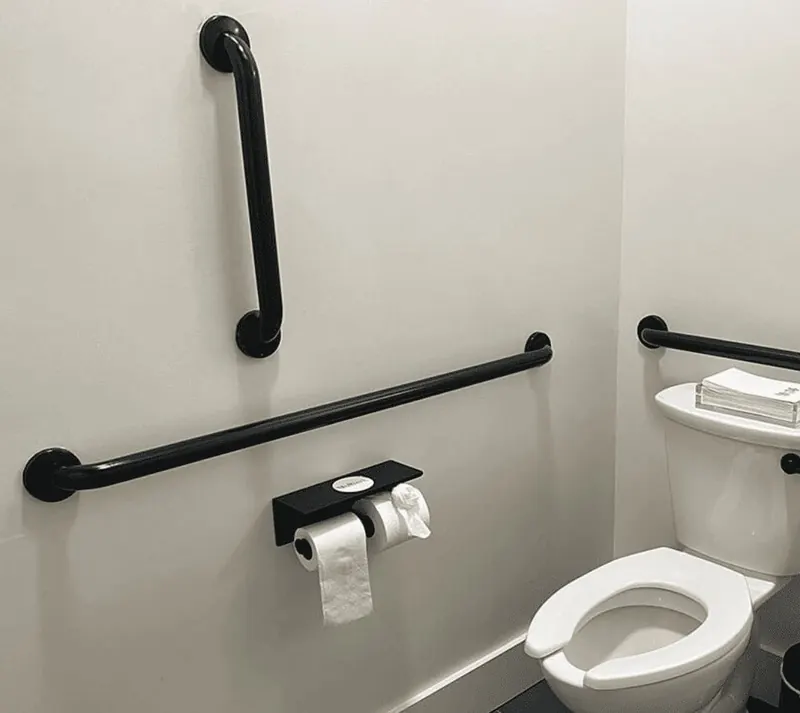
- Match the bar to the fixtures: brushed with stainless or nickel, matte black with black, bronze with bronze, brass with gold tones, white to disappear.
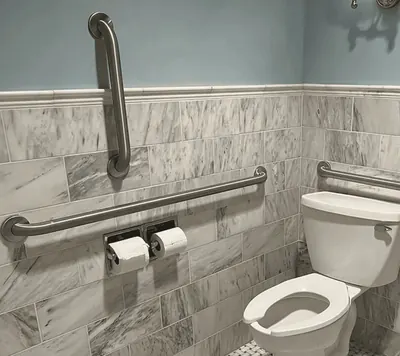
- Placement is design too — align a bar with grout lines or the towel bar and it stops looking like an afterthought.
- Every finish is the same installed price; you choose on the day.
When people say they don't want their bathroom to look like a hospital, they're describing a specific object: a fat, bright-chrome tube with two big screw-on flanges, mounted wherever the contractor found a stud. That object still exists and you can still buy it. You just don't have to.
What actually makes a bar look "medical"
- Polished chrome. It's the finish of hospital fixtures because it's easy to sanitize and cheap. In a home it clashes with almost every modern faucet finish.
- 1½-inch tube. Commercial bars are often the thickest the ADA allows. A 1¼-inch bar is easier for most hands to grip and visibly lighter.
- Exposed flanges. Visible screws say "attached." Concealed flanges — a smooth cover that snaps over the mounting plate — say "installed."
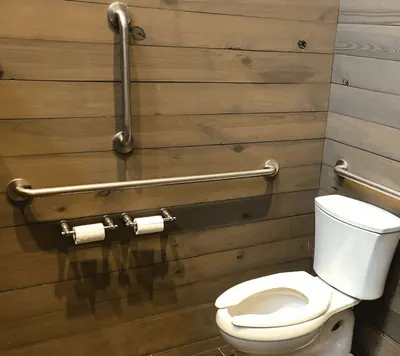
- Random placement. A bar at an odd height, crossing grout lines diagonally, six inches from the towel ring: that's what makes it look like an add-on.
Fix those four things and the bar stops being furniture from another building.
Match the finish to what's already there
Every bar we install is 1¼-inch 304 stainless with concealed flanges, in eight finishes. The rule of thumb is to match the faucet and shower trim, or deliberately match the tile.
| Finish | Pairs with | The effect |
|---|---|---|
| Brushed stainless | Brushed nickel or stainless faucets, most modern DFW bathrooms | Quiet and neutral; hides fingerprints and water spots |
| Matte black | Black fixtures, white or light tile, wood-look tile | Reads as a deliberate design accent |
| Oil-rubbed bronze | Bronze faucets, warm stone, traditional and Tuscan-style homes | Warm and classic; blends with darker palettes |
| Brushed brass | Gold, champagne and brass fixtures | Matches the current designer trend without looking plated |
| White | White tile, white tub surrounds, fiberglass-look walls | Nearly disappears against a white wall |
| Polished stainless | Chrome fixtures | Mirror-bright; the closest to classic chrome without being chrome-plated |
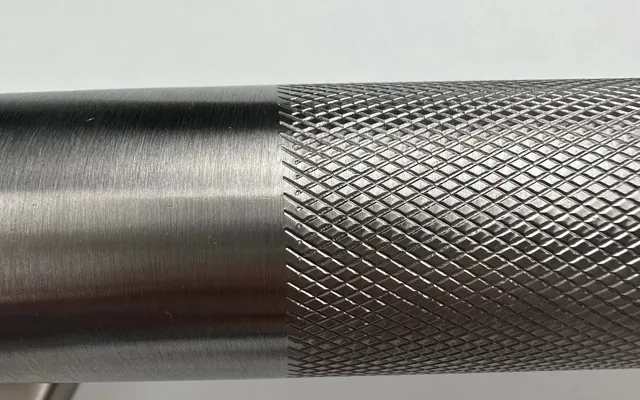
| Peened or knurled | Any of the above where grip matters most (showers, entries) | Textured stainless; the grip section reads as detail rather than equipment |
Not sure? We bring every finish on the truck and hold them against your wall before you choose. Nobody picks from a catalogue photo.
Placement is half the look
A bar looks intentional when it relates to the things around it. A few habits from our installs:
- Run horizontal bars along a grout line where the safe height range allows it. The bar and the tile agree, and the eye reads it as trim.
- Line up with the towel bar or the top of the wainscot where there is one. Two horizontals at different heights look accidental; two at the same height look planned.
- Vertical bars at the entry sit naturally against the edge of the tile return or the shower opening.
- Keep lengths consistent. If the toilet bar is 24 inches, the shower bar generally shouldn't be 36 unless the wall calls for it.
Safety sets the height range and the wall; within that, we place for the person first and the room second, and the two rarely conflict.
Two things a stylish bar is not
It is not a towel bar. Towel bars are made to hold a towel; they are not designed for body weight and can pull out of the wall if someone grabs one in a fall. If you want a bar that holds towels, install a grab bar and hang towels on it — never the other way around.
It is not a suction cup. Suction bars are sold as a no-drill "stylish" option. They rely on a vacuum seal against smooth tile that weakens with humidity and time, and they can release without warning. We don't install them and we don't recommend them for anything that will take body weight.
What it costs
Every finish and every length from 12 to 48 inches is the same price: $329 for the first bar and $299 for each additional bar in the same visit, installed. That includes the bar, hardware, a load test in front of you, and cleanup, with no deposit.
Common questions
Can I mix finishes in one bathroom?
You can, but most bathrooms look better with one finish for all the bars, matched to the faucet and shower trim. If the toilet area and the shower have different fixtures, matching each bar to its own zone works too.
Does a textured bar look industrial?
The texture covers the grip section of the bar, not the whole thing, and stops before the flanges. In brushed stainless it reads as a detail — most people don't notice it until they hold it.
Which finish hides water spots best?
Brushed stainless, then peened. Polished stainless and matte black show water spots and fingerprints most readily and reward a quick wipe after showers.
Can you match a discontinued or unusual fixture finish?
We'll hold each of the eight finishes against your fixtures on the day and pick the closest. Between brushed, polished, black, bronze, brass and white, there's a near match for almost every faucet made in the last thirty years.
See every finish against your own wall.
We bring all eight finishes to every install so you choose in your bathroom, not from a photo. Same price for any finish or length.