Key takeaways
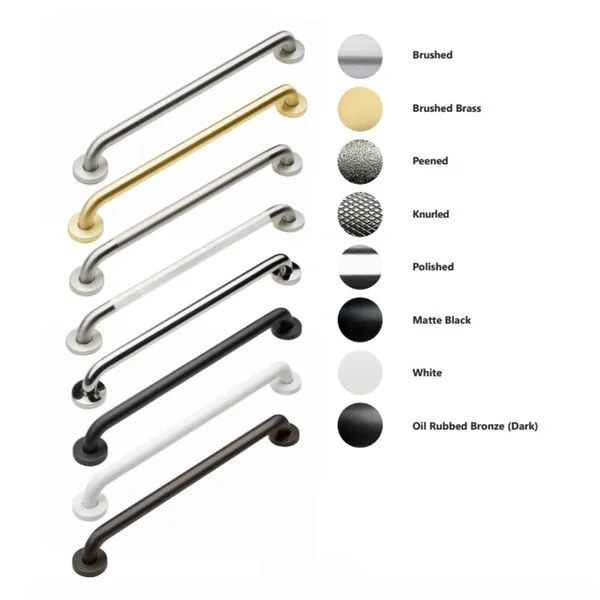
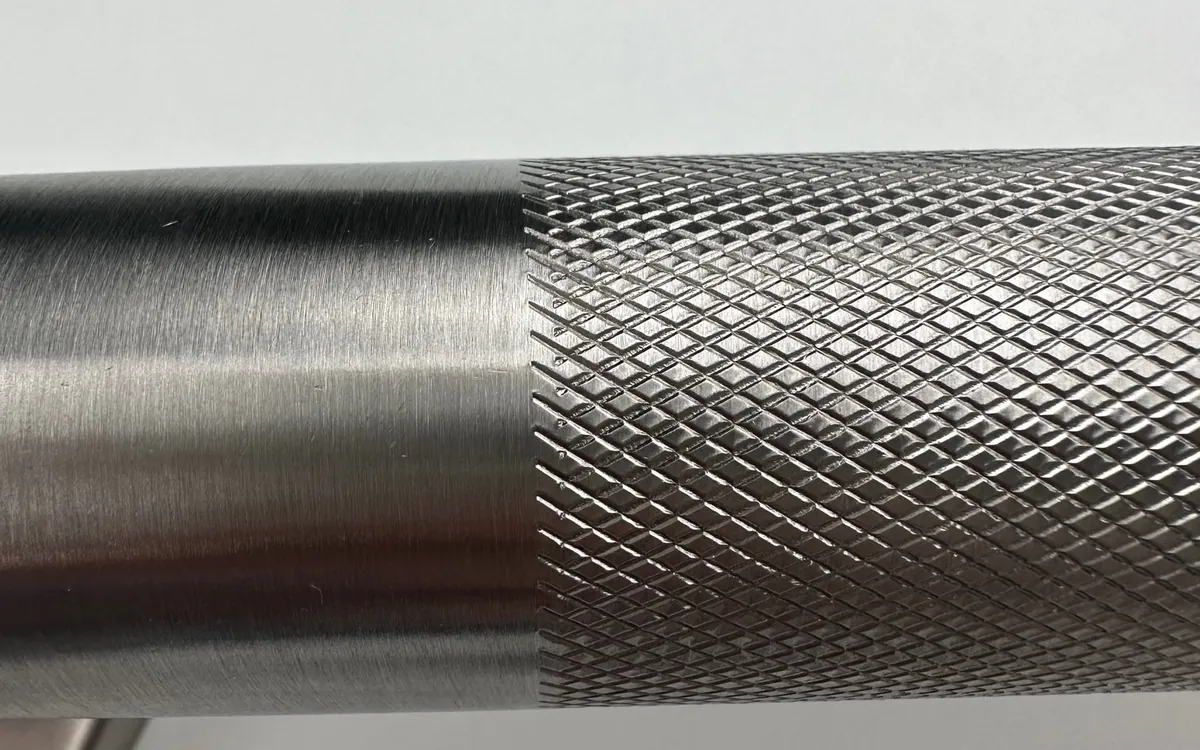
- Knurling is a diamond-cut texture machined into stainless steel; it adds friction between a wet hand and the bar.
- Knurled bars grip hardest; peened bars are softer to the touch and slightly easier to wipe down. Both beat smooth stainless when wet.
- Choose knurled inside the shower, at tub and shower entries, and for anyone with reduced hand strength.
- Same installed price as every other finish we carry: $329 first bar, $299 each additional.
Falls are the leading cause of injury for adults 65 and older, and about one in four report a fall each year. A large share of those happen in the bathroom, at the exact moments a hand reaches for something — stepping over a tub wall, turning on a slick floor, standing up from the toilet. A grab bar that's anchored properly gives that hand something solid to grip. A grab bar with the right texture makes sure the hand doesn't slide off it.
What a knurled grab bar is
A knurled bar starts life as an ordinary 304 stainless steel grab bar. On a lathe, a hardened knurling tool is pressed against the spinning bar and cuts a fine diamond pattern into the surface — the same process used on tool handles, barbell grips and the grip of a good pocket knife. The result is thousands of small ridges that bite gently into the skin of a wet or soapy hand and stop it sliding. Nothing is coated on and nothing can peel; the texture is the metal itself.
The knurled section usually covers the gripping length of the bar and stops short of the flanges, so it wipes clean and looks intentional rather than industrial.
Knurled vs. peened: what's the difference?
Both textures improve grip over smooth stainless, and both are options on every bar we install. They feel different in the hand.
| Feature | Knurled | Peened |
|---|---|---|
| Texture | Diamond pattern cut into the bar | Fine dimpled surface, like lightly hammered metal |
| Grip when wet | Maximum — the ridges catch the skin | Good — noticeably better than smooth |
| Hand feel | Distinct, secure, a little "tool-like" | Softer, closer to a smooth bar |
| Cleaning | Soap and a soft nylon brush now and then | Wipes clean with a cloth |
| Best for | Showers, entries, weaker grip | Anyone who wants more grip without the bite |
A simple way to decide: if the person using the bar has arthritis, is recovering from surgery, or has had a hand slip on a wet bar before, go knurled. If they mostly want reassurance and a softer feel, go peened. We bring both on the truck so you can hold each one before choosing.
Where knurled bars make the most sense
- Inside the shower, where hands are wet and soap residue on a smooth bar is at its slickest.
- At the tub or shower entry — a vertical knurled bar is the one you grab mid-step, when a slip has the furthest to fall.
- For reduced hand strength: arthritis, post-surgery recovery, neuropathy, or simply a smaller hand.
- High-traffic bathrooms shared by several family members or used by caregivers, where the bar is grabbed many times a day.
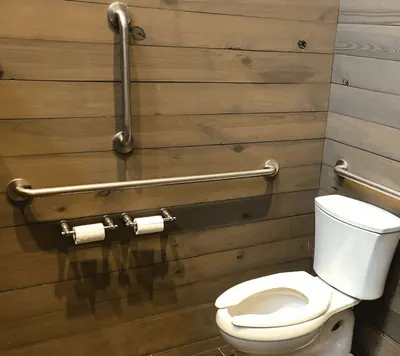
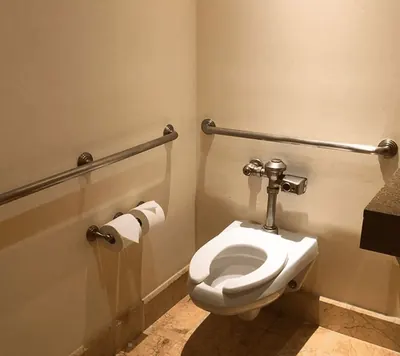
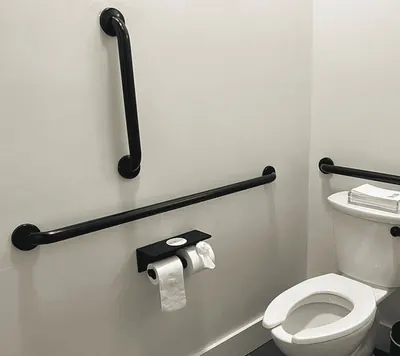
Beside the toilet, where hands are usually dry, most people are just as happy with a brushed or peened bar; the choice there is more about looks.
Safety standards still come first
Texture helps a hand hold on. It doesn't help if the bar itself lets go, so the fundamentals don't change:
- Strength: the bar, its fasteners and the wall behind it must resist at least 250 lb applied anywhere (ADA / TAS §609.8). Ours fasten into a stud whenever one is where the bar belongs; on tile and stone where a stud isn't available, into a fastening system engineered specifically for grab bars.
- Diameter: 1¼" to 2" for a circular bar (§609.2.1). Most hands, including arthritic ones, are happiest at 1¼"; larger hands may prefer 1½".
- Clearance: 1½" between the wall and the bar so fingers wrap fully (§609.3).
- Surface: free of sharp or abrasive elements, with rounded edges (§609.5). Knurling qualifies — it's textured, not abrasive.
- Fittings: the bar must not rotate in its flanges (§609.6).
These are legal requirements in commercial and public restrooms. In a home they're our starting point; the person's height and reach decide the final spot. The full breakdown is in our ADA / TAS grab bar guide.
304 vs. 316 stainless
Nearly all grab bars — knurled included — are 304 stainless steel, which resists rust well in an indoor bathroom with ordinary care. 316 stainless adds molybdenum for extra resistance to chlorides, which matters around pools and in salt air but is overkill for a DFW bathroom. What actually causes spots on a 304 bar is bleach and acidic cleaners; our care guide covers what to use and what to avoid.
Pros and cons
Pros
- Best grip of any finish when wet or soapy
- Ideal for weak, arthritic or small hands
- Texture is machined in — nothing to wear off
- Confidence during transfers, when it counts
Cons
- More pronounced feel than some people want
- Needs an occasional brush to clear soap film
- Available in stainless finishes only
Where we usually put them
- Shower back wall: a 24"–36" horizontal bar for balance while washing.
- Shower or tub entry: an 18" vertical bar for stepping in and out.
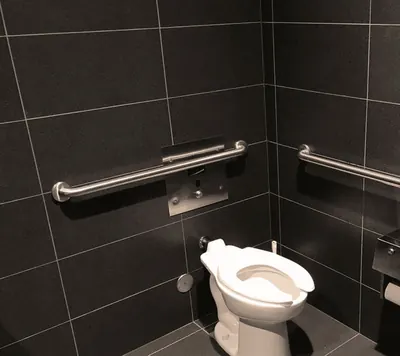
- Beside the toilet: a 24"–36" horizontal bar for sitting and standing — knurled if hands tend to be wet here, otherwise your choice of finish.
Every installation includes a free walk-through where we hold the bar where it would go and have the person who'll use it try the height and reach before we mark anything.
Caring for a knurled bar
Rinse it when you rinse the shower and dry it when you can. Every few weeks, a soft nylon brush with a little dish soap clears any film from the diamond pattern. No bleach, no abrasive powders, no steel wool — the same rules as any stainless bar.
Common questions
Are knurled grab bars ADA compliant?
Yes. ADA / TAS §609.5 requires surfaces free of sharp or abrasive elements with rounded edges, and §609.8 requires the installed bar to resist 250 lb. A knurled stainless bar meets both when properly installed.
Do knurled grab bars hurt your hands?
No. The texture is more pronounced than smooth or peened stainless, but it isn't sharp. Most people prefer the extra bite in a wet shower; anyone who finds it too tactile tends to be happier with peened.
What's the difference between 304 and 316 stainless steel?
304 is the standard for indoor bathrooms and resists rust well with normal care. 316 adds molybdenum for extra resistance to salt and chlorine — useful for pool areas and coastal homes, unnecessary in a typical DFW bathroom.
How much does a knurled grab bar cost installed?
The same as any other finish we carry: $329 for the first bar installed and $299 for each additional bar in the same visit. That includes the bar, hardware, labor, load testing and cleanup, with no deposit.
Try both textures in your own hand.
We bring knurled and peened bars to every install so you can choose on the spot. $329 first bar, $299 each additional — everything included, no deposit.