Key takeaways
- The bathroom is where most falls at home happen; the moments that matter are stepping over, standing up and turning on wet tile.
- Grab bars come first because they address all three. The other six items are things you can do this weekend.
- Never rely on suction-cup bars, towel bars or the toilet paper holder to take body weight.
- A safer bathroom for one person is a safer bathroom for everyone who uses it.
Falls send roughly three million older adults to emergency departments in the U.S. each year, and the bathroom is the room where most falls at home happen. The good news is that bathroom falls cluster around a few predictable moments, and each one can be made safer without a contractor or a remodel. Here's the checklist we'd give a friend, in the order we'd do it.
1. Grab bars — toilet, shower entry, shower wall
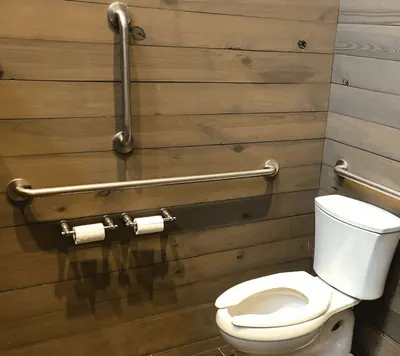
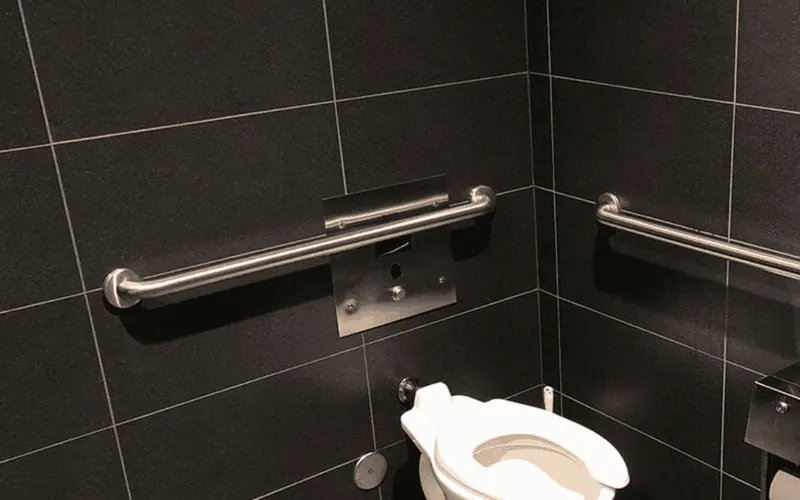
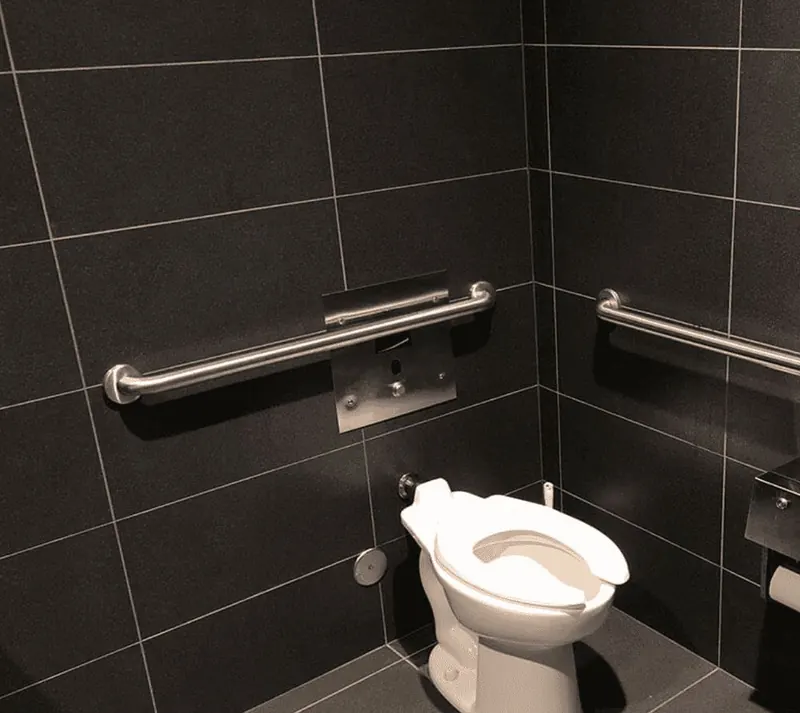
First, because they address the three most dangerous moments at once: standing up from the toilet, stepping over the tub wall or threshold, and keeping balance on wet tile. Most homes need two or three: a horizontal bar beside the toilet, a vertical bar at the shower or tub entry, and a horizontal bar on the shower's back wall. Placement should be for the person who'll use them — their height, their stronger hand — not a template. Our placement guide has the ranges we start from.
This is the one item on the list that involves drilling into your wall and fastening to studs, so it's the one worth having done properly. It's also the only one we do; the rest below you can handle yourself.
2. Non-slip surfaces
A textured mat with suction cups inside the tub or shower, and a rubber-backed mat on the floor outside it. Replace the bath mat that slides. If the tub floor is glassy, adhesive non-slip strips or a clear anti-slip treatment for tile are inexpensive. Check the mats monthly — the suction cups on a tub mat lose their hold as they age.
3. Lighting, especially at night
A large share of falls happen on the way to the bathroom at night. Plug-in motion-sensor night lights along the route from bed to bathroom, and one in the bathroom itself, cost a few dollars each. Inside the bathroom, make sure the light switch is reachable from the door and the bulb is bright enough to see the edge of the tub and the floor clearly.
4. A shower seat or transfer bench
Sitting to wash removes the balance problem. A fold-down wall seat or a freestanding shower chair works in a walk-in shower; for a tub, a transfer bench that straddles the tub wall lets the person sit down outside and slide in without stepping over. Pair it with the entry grab bar — you still need a handhold to lower onto the seat and get up from it.
5. A handheld shower head
A handheld on a slide bar lets a seated person wash without standing or twisting, and lets a caregiver help without both of them getting soaked. It's a ten-minute swap on most fixtures and costs less than a dinner out. If you install a slide bar, don't use it as a grab bar — it isn't one.
6. Toilet height
A standard toilet is about 15 inches high; a "comfort height" toilet is 17 to 19. The extra inches make standing up noticeably easier on knees and hips. A raised toilet seat or a toilet safety frame gives the same effect without replacing the fixture, and both are same-day purchases at a pharmacy or medical supply store. The side grab bar (item 1) is what makes the push-up controlled.
7. Clear the path
Remove throw rugs that aren't rubber-backed. Move the scale, the hamper and the trash can out of the walkway. Put the towel within reach of the shower so nobody steps out dripping to get it. If there's a raised threshold at the bathroom door, a beveled threshold ramp smooths it. None of this costs anything but an afternoon.
Three things never to rely on
- Suction-cup grab bars. They hold until they don't, and they don't warn you. Fine for a washcloth; never for body weight.
- Towel bars. Designed to hold a towel. They are not designed for body weight and can pull out of the wall if someone grabs one in a fall, and a broken bracket makes things worse.
- The toilet paper holder, the sink edge, the shower door. People grab what's there. Put a real bar where the hand goes so that's what's there.
Where to start if you only do one thing
Install the grab bars. Every other item on the list works better with a fixed handhold in place, and the bars are the one item that's hard to do well yourself. In DFW that's $329 for the first bar and $299 for each additional bar in the same visit, installed, with no deposit and usually within the week. Then buy the night lights on the way home.
Common questions
Which of these do you install?
The grab bars only. The other six items are equipment or small changes you can make yourself, and we've listed them because they work best alongside the bars. We're happy to point out where a shower seat or handheld would help while we're there.
Do I need all seven?
No. Start with grab bars, non-slip mats and night lights — the three that address the most common falls for the least effort — and add the rest as the person's needs change.
What about walk-in tubs?
They're a large remodel and a large expense, and for most people a transfer bench, a handheld shower and two grab bars solve the same problem in an afternoon. We don't sell walk-in tubs and we don't upsell to them.
How much does the grab bar part cost?
$329 for the first bar and $299 for each additional bar in the same visit, installed — bar, hardware, labor, a load test in front of you, and cleanup. Three bars, which covers most bathrooms, is $927. No deposit.
Start with item one. We'll handle it.
Two or three bars, placed for the person who'll use them, usually within the week. No deposit; you pay when it's done.