Key takeaways
- Most bathroom falls happen during a transfer — sitting, standing, stepping over — when weight shifts onto one leg and there's nothing to hold.
- A fixed handhold can turn a fall into a stumble. That's the entire job, and it's why placement matters as much as strength.
- Grab bars help far more people than seniors: post-surgery, pregnancy, children, anyone on wet tile.
- A bar works when four things are right: anchoring, placement, diameter and grip. Miss the first and none of the others matter.
The moment a grab bar is for
Falls rarely happen while someone is standing still. They happen during a transfer — the second or two when weight moves from one position to another: rising from the toilet, lifting a leg over the tub wall, turning under the shower to reach the shampoo. In that moment the body is balanced on one leg or one hip, the floor is wet, and if balance goes there's nothing to catch it but the sink edge or the shower door.
A grab bar puts something there. Not something to lean on all day — something to grip in the half-second when it's needed, so that a loss of balance becomes a stumble caught by the hand instead of a fall to the tile. That is the whole function, and everything about a good installation follows from it.
Why the bathroom
About one in four adults over 65 reports a fall each year, and the bathroom is the most common room in the house for them. It's the only room that combines a hard, wet floor with all three of the hardest transfers, done daily, often alone, sometimes in the dark. The average hospital cost of a fall injury runs into the tens of thousands of dollars, and hip fractures in older adults frequently mean a long recovery and a permanent loss of independence. The bar that helps prevent one is a rounding error by comparison.
Who it's for
Grab bars are sold as senior equipment, and seniors are the largest group who benefit. But the list of people who use them, once they're on the wall, is longer:
- Anyone recovering from surgery — hips, knees, backs, hearts — under precautions that limit bending and twisting.
- People in late pregnancy, when balance and the center of gravity change quickly.
- Children climbing out of a tub, and the parent leaning over it.
- Anyone with dizziness from medication, blood pressure or an inner-ear problem.
- Everyone else, on the one morning the floor is wetter than they thought.
A bathroom made safer for one person is safer for everyone who uses it. That's also why we install to fit the person who needs it most, then check that it works for the rest of the household.
The three transfers, and where the bars go
- Toilet
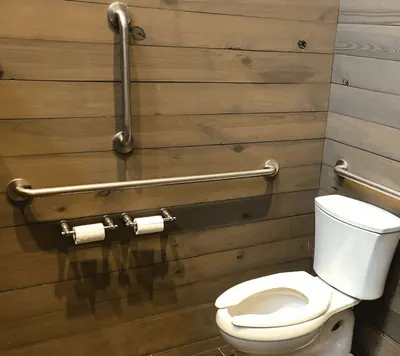
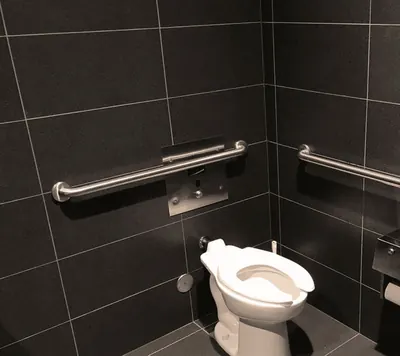
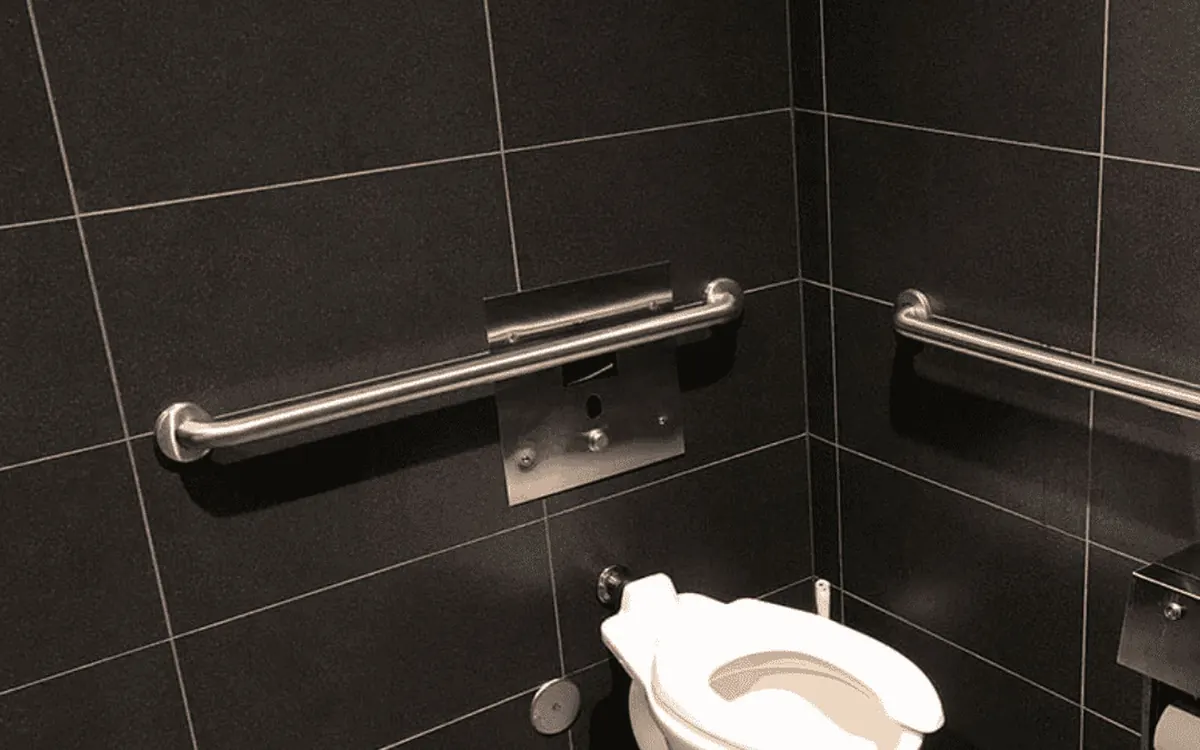
- A horizontal bar on the side wall, at a height that lets the person push down with a nearly straight arm. Sit-to-stand is the most repeated transfer of the day.
- Shower or tub entry
- A vertical bar just inside the opening. It gives the hand a hold through the entire step-over, as the weight passes from one leg to the other.
- Inside the shower
- A horizontal bar on the back wall for balance while washing and turning. In a tub, a diagonal bar on the long wall follows the hand as the person lowers and rises.
Those are starting points; the right spot for one person is a few inches from the right spot for another. We hold the bar in place and have the person try it before we mark anything. The ADA / TAS guide explains the ranges we start from and why they don't apply as rules in a home.
What separates a bar that works from one that doesn't
- Anchoring. The bar, its fasteners and the wall must resist at least 250 pounds applied anywhere (ADA / TAS §609.8). That means studs, or on tiled and stone walls where a stud isn't where the bar needs to be, a fastener made specifically for grab bars. Not the plastic anchors in the box, not a toggle from the hardware aisle, and never a suction cup.
- Placement. A bar the person has to reach for isn't a handhold; it's decoration. The bar goes where the hand already goes.
- Diameter. 1¼ to 2 inches is the standard; 1¼ suits most hands, including arthritic ones, because the fingers can close around it.
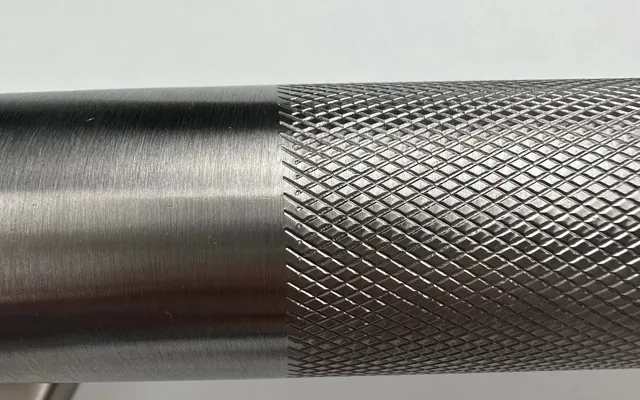
- Grip. A smooth bar is fine dry and slick with soap. Inside a shower, a peened or knurled texture keeps a wet hand where it lands.
Get the first one wrong and the other three are irrelevant, which is why we fasten into studs first, use grab-bar-specific fasteners only through tile or stone, never put a hollow-wall fastener through bare drywall, and load-test every bar in front of you before we leave.
What it costs, and what it doesn't
In DFW, $329 for the first bar and $299 for each additional bar in the same visit — bar in any finish and length, hardware, installation, load test and cleanup, no deposit. Most bathrooms are two or three bars and about an hour. Against the cost of the fall it's meant to prevent, it isn't a close call.
Common questions
At what age should someone install grab bars?
There isn't one. The better question is whether anyone in the house steps over a tub wall or stands up from a toilet on a wet floor — which is everyone. Installing before a fall costs the same as installing after, without the injury.
Do grab bars really help prevent falls, or just make people feel safer?
Both, within limits. No bar prevents every fall, but a fixed handhold at the moment of a transfer gives a slipping person something to catch themselves with, which is why grab bars are a standard recommendation from occupational therapists and fall-prevention programs. Feeling safer also matters: people who fear falling often move less, which itself raises the risk.
Where's the single most important place for a bar?
Beside the toilet for most people, because sit-to-stand is the most repeated transfer and the one hip and knee problems make hardest. For anyone with a tub, the entry bar is a close second.
Can I install one myself?
You can, and we'll install a bar you supply for the same price. The failures we're called to fix are almost always anchoring — plastic anchors in drywall, suction cups — and placement. If you do it yourself, fasten into studs and load-test it firmly before anyone relies on it.
One bar. One hour. No deposit.
$329 for the first bar and $299 for each additional bar in the same visit, with the bar, hardware, load test and cleanup included. Placed for the person who'll use it.