Key takeaways
- Brushed stainless has a fine, directional satin grain that scatters light — so it hides fingerprints and water spots better than any other metal finish.
- It matches brushed nickel and stainless faucets, which are the most common fixtures in DFW homes built or remodeled since the 1990s.
- 304 stainless resists rust with basic care; bleach and acidic cleaners are what cause spots.
- Available smooth or with a peened or knurled grip section, in any length from 12 to 48 inches, at the same price as every other finish.
What "brushed" means
A brushed finish is made by running the stainless tube against an abrasive belt so the surface carries thousands of fine, parallel scratches — the grain. Where a polished bar acts as a mirror, a brushed bar scatters light along the grain. The result is a soft satin look that reads as warm rather than clinical, and, more practically, one that doesn't show every drop of water and every fingerprint.
Why it fits so many bathrooms
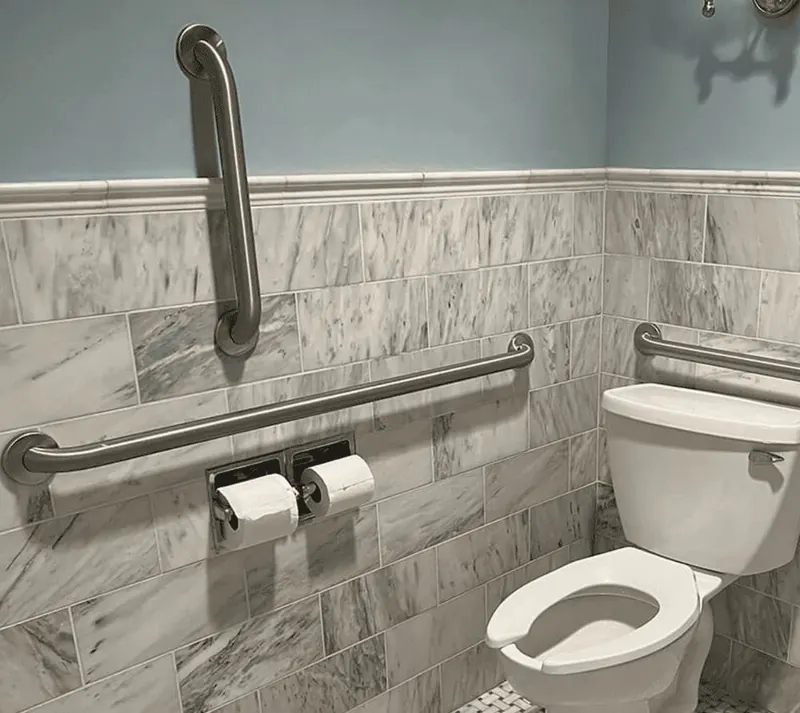
The faucet decides the finish, and for most DFW homes built or updated in the last thirty years the faucet is brushed nickel or stainless. Brushed stainless grab bars sit alongside those fixtures without calling attention to themselves. They also work with almost any tile: white subway, grey porcelain, travertine, marble, wood-look plank. It is the one finish we've never seen clash.
It's also the finish of choice for commercial restrooms, clinics and senior living for a reason that applies at home too: it looks clean, and it stays looking clean between wipe-downs.
Brushed vs. polished stainless
| Feature | Brushed | Polished |
|---|---|---|
| Look | Soft satin, directional grain | Mirror-bright |
| Water spots & fingerprints | Largely hidden | Visible until wiped |
| Pairs with | Brushed nickel, stainless, most tile | Chrome fixtures |
| Scratches | Blend into the grain | Show |
| Cleaning | Soft cloth along the grain | Soft cloth, then dry |
The material underneath
Every bar we install is 304 stainless steel, the grade used for kitchen sinks and commercial bathroom fixtures. It resists rust because a thin chromium-oxide layer forms on the surface and heals itself whenever the steel is clean and exposed to air. What interferes with that layer is chlorides — bleach and chlorine cleaners, or concentrated urine spray beside a toilet — and iron left behind by steel wool. Avoid those and the finish looks after itself. Our care guide covers the details, including how to lift a rust spot if one ever appears.
Brushed with a grip section
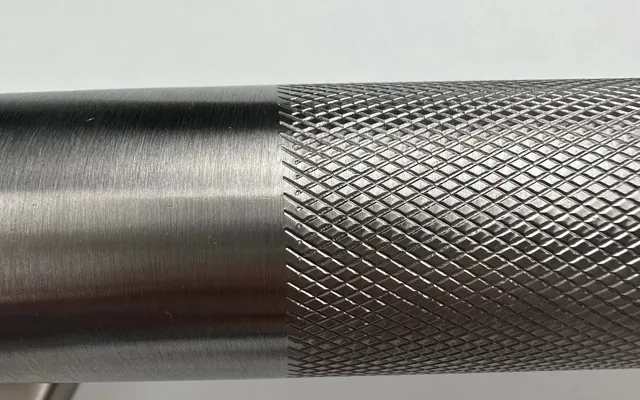
Brushed is also the base for our two textured options. A peened bar has a fine dimpled grip section; a knurled bar has a diamond-cut one. Both keep the brushed look at the ends and add traction where the hand goes — useful inside a shower, where soap and water make a smooth bar slick. The peened vs. knurled comparison goes into the difference.
Caring for it
Wipe with a soft cloth, mild dish soap and warm water, then dry — always along the grain, never across it. For fingerprints, a stainless-steel cleaner from the grocery store. Never bleach, scouring powder, steel wool or acidic tile cleaner. That's the whole routine.
Price and availability
Brushed stainless is the same price as every finish: $329 for the first bar and $299 for each additional bar in the same visit, installed, any length from 12 to 48 inches. We carry it on the truck, so you can hold it against your wall on the day and decide.
Common questions
Does brushed stainless match brushed nickel?
Closely enough that most people can't tell them apart on the wall. Brushed nickel has a very slightly warmer tone; side by side with a brushed stainless bar the difference is hard to see, and across a bathroom it disappears.
Will a brushed bar rust in a shower?
304 stainless is highly rust-resistant and is the standard for wet-area fixtures. The spots people occasionally see come from bleach or acidic cleaners, not from the shower itself, and they lift with a mild non-chloride cleanser.
Is brushed slippery when wet?
The satin grain gives slightly more grip than a polished bar, but a smooth bar of any finish gets slick with soap. If grip is the priority — inside the shower, or for a weaker hand — choose brushed with a peened or knurled grip section.
How do I clean it without scratching?
Soft cloth, mild soap, warm water, dry along the grain. No scouring pads or steel wool. Fine scratches from normal use blend into the brushed grain and aren't noticeable.
The finish most people choose once they've held it.
We bring brushed stainless — smooth, peened and knurled — to every install. Same price as every finish, no deposit.